Structural rodent exclusion establishes an architectural barrier against commensal rodents, preventing them from breaching building envelopes across Jefferson County. In Birmingham neighborhoods such as Highland Park,…
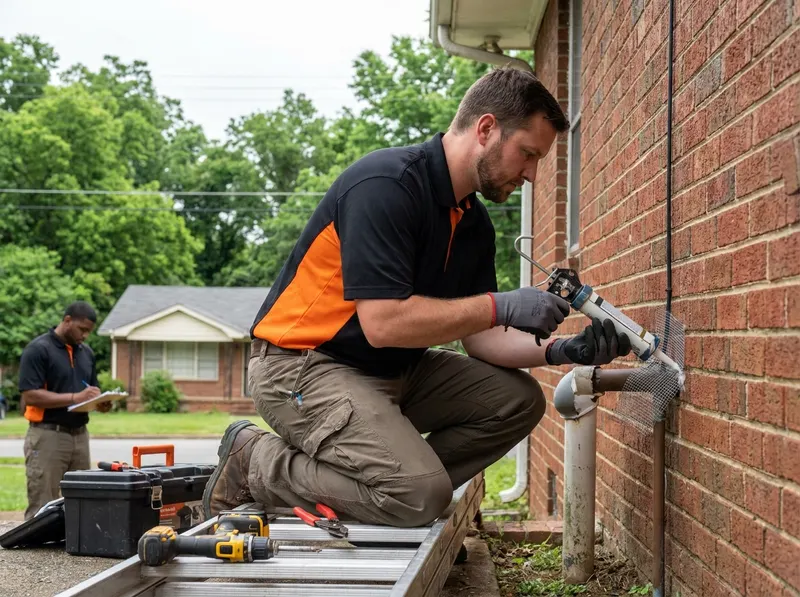
Structural rodent exclusion establishes an architectural barrier against commensal rodents, preventing them from breaching building envelopes across Jefferson County. In Birmingham neighborhoods such as Highland Park, Forest Park, and Redmont Park, older housing stock frequently features stone masonry foundations, vented crawlspaces, and complex rooflines that settle over decades. Roof rats exploit overhanging oak canopies near the Birmingham Botanical Gardens and Railroad Park to access fascia gaps, roof returns, and attic soffits. Ground-level rodents, including Norway rats and house mice, access crawlspaces via deteriorated brick vents and plumbing penetrations common in Glen Iris and Five Points South cottages. While chemical bait stations temporarily reduce regional rodent density, traps and rodenticides do not prevent new populations from entering. Physical exclusion permanently removes access by mechanically barricading entry points measuring 1/4 inch or larger.
Structural rodent exclusion requires durable construction materials that withstand continuous gnawing pressure. Technicians secure 19-gauge galvanized steel hardware cloth over foundation vents, mortar voids around sandstone blocks, and install 16-gauge metal chimney caps and copper mesh inside weep screeds. Ridge caps, plumbing vent flashings, and subfloor utility chases undergo sealing with elastomeric foam backed by abrasive steel fibers, which rodents cannot chew through without mouth trauma. In historical brick homes in Crestwood North and Bush Hills, mortar degradation creates transit conduits beneath floorboards; physical exclusion targets these voids directly at ground level, diverting rodents away from the interior building envelope without depositing persistent airborne pesticide residues.
Selecting permanent structural rodent exclusion over recurring baiting programs involves a direct structural trade-off. Simple baiting services maintain recurring exterior poison boxes, which reduces outdoor populations but leaves structural voids open, allowing poisoned rodents to expire inside drywall partitions, insulation layers, and ceiling cavities. Structural exclusion demands higher initial labor to survey rooflines, crawlspaces, and foundational perimeters, but eliminates continuous dependency on ongoing chemical dispersion. In sloped hillside properties throughout Redmont Park and around Vulcan Park and Museum, high exterior humidity and dense ground cover sustain year-round rodent pressure, making mechanical barrier exclusion the only long-term measure for protecting indoor air quality, subfloor electrical wiring, and plumbing insulation.
Every job gets a firm, written price after a free on-site visit.
Tell us about your structural rodent exclusion job in Birmingham and we'll send a clear, written quote, usually the same day.
 Torvexa Pest Defense