Exterior perimeter barrier applications prevent pests from entering living quarters, kitchen pantries, and crawl spaces by arresting insect movement outside the building envelope. This treatment method avoids indoor…
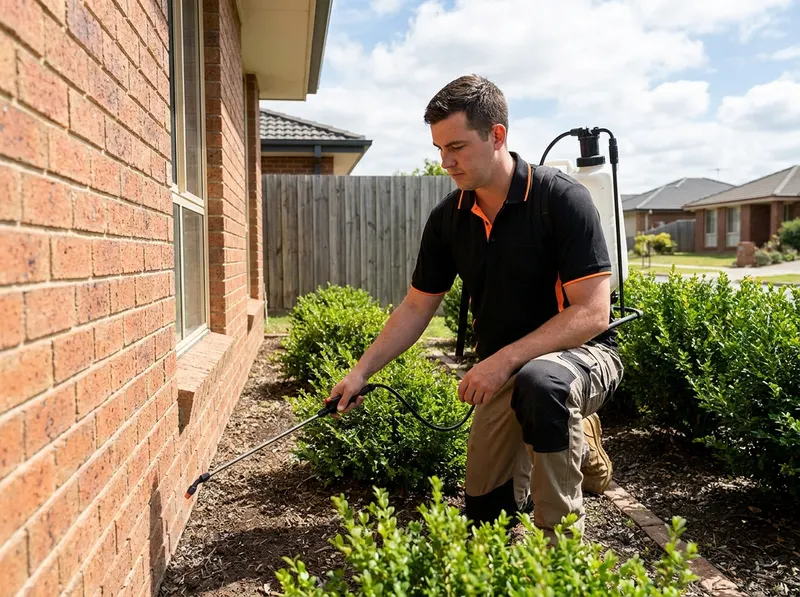
Exterior perimeter barrier applications prevent pests from entering living quarters, kitchen pantries, and crawl spaces by arresting insect movement outside the building envelope. This treatment method avoids indoor liquid applications, protecting indoor air quality while eliminating the need to move interior furniture or vacate living spaces. For historic raised foundations in Highland Park and Glen Iris, liquid compounds bond with exterior masonry and porch piers without introducing airborne aerosols into older floorboard gaps. Properties situated near dense tree canopies in Forest Park and Redmont Park experience heavy fall leaf litter that shelters smoky brown cockroaches; establishing a 6-foot soil perimeter creates an unbroken chemical interface that breaks insect breeding cycles before specimens scale vertical siding.
Decision guidance requires evaluating structure type and active target pests. If an infestation is isolated strictly to inside kitchen cabinetry or plumbing voids, an interior targeted injection is necessary. When insect traffic originates from foundation gardens, pine straw mulch beds, or damp exterior grading, frequently observed near Red Mountain Park and Bush Hills, exterior perimeter barrier applications provide durable defense. The operational trade-off centers on environmental exposure: exterior rainfall and intense solar ultraviolet radiation degrade surface chemical bonds over 60 to 90 days, requiring scheduled reapplication, whereas interior crack-and-crevice treatments remain protected from weather degradation indefinitely.
Technicians measure the foundation run and apply low-odor, micro-encapsulated formulations calibrated for Central Alabama soil humidity. In sloping neighborhoods such as Crestwood North, Avondale, and Roebuck Springs, soil-drench nozzles inject formulations directly below mulch horizons to ensure runoff does not occur during sudden Appalachian foothill thunderstorms. Foundation weep holes receive non-staining dry insecticidal dust under mechanical pressure, preventing entry without blocking air circulation. Property owners can schedule direct inspections by calling (659) 272-4032.
Every job gets a firm, written price after a free on-site visit.
Tell us about your exterior perimeter barrier applications job in Birmingham and we'll send a clear, written quote, usually the same day.
 Torvexa Pest Defense