Securing residential properties against invasive insect and rodent populations requires structured, scientific intervention across Jefferson County. Property owners seeking pest control services Birmingham or reliable pest control services near me receive comprehensive interior sanitization alongside outer structural defensive perimeters.
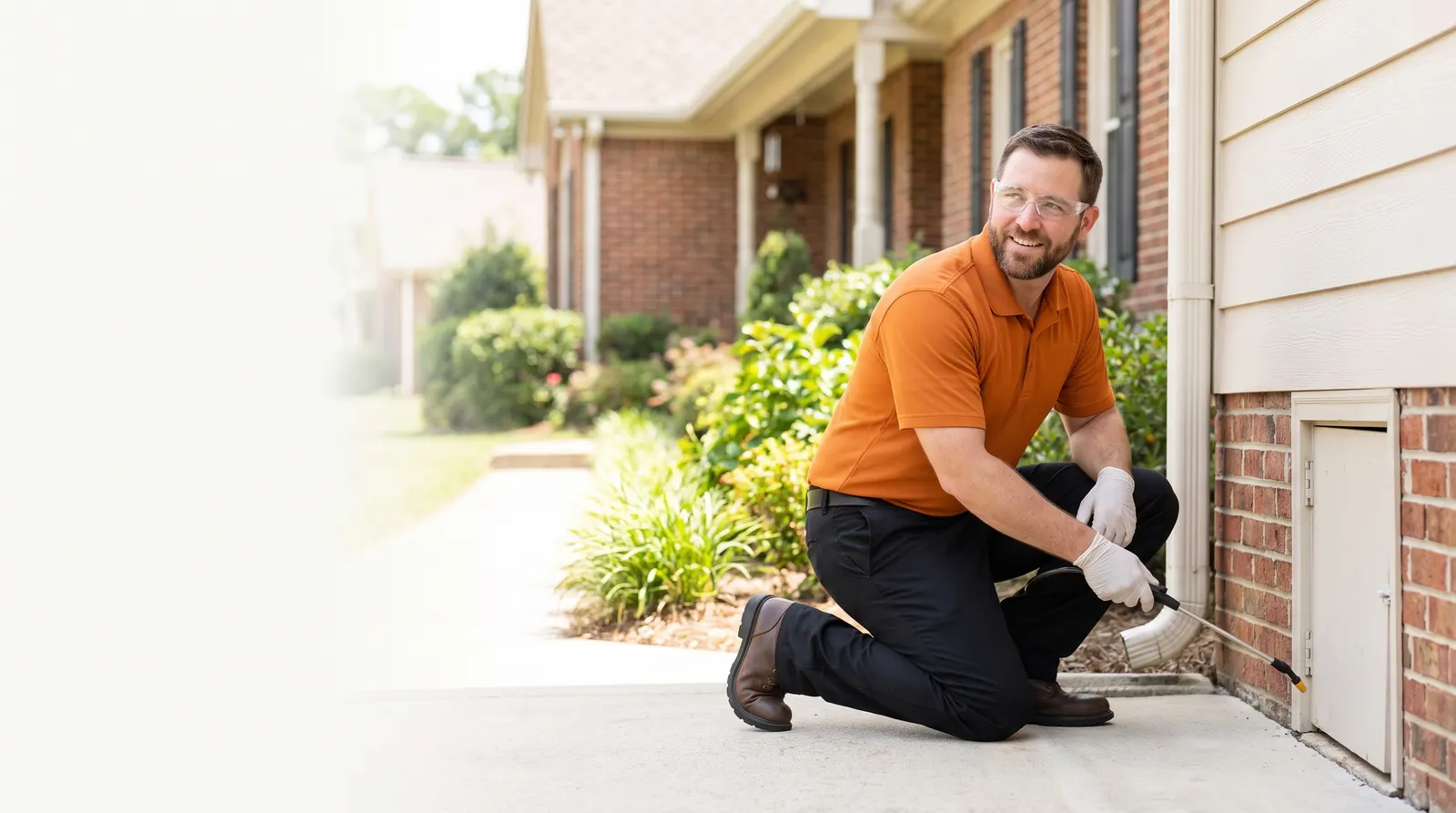
Pest control services in Birmingham is a specialized structural inspection, targeted extermination, and biological perimeter defense protocol designed to neutralize wood-destroying insects, sanitary vectors, and structural pests across Birmingham properties.
Every service reflects the same meticulous attention to detail, whether it's a single job or a larger pest control services project across Birmingham.
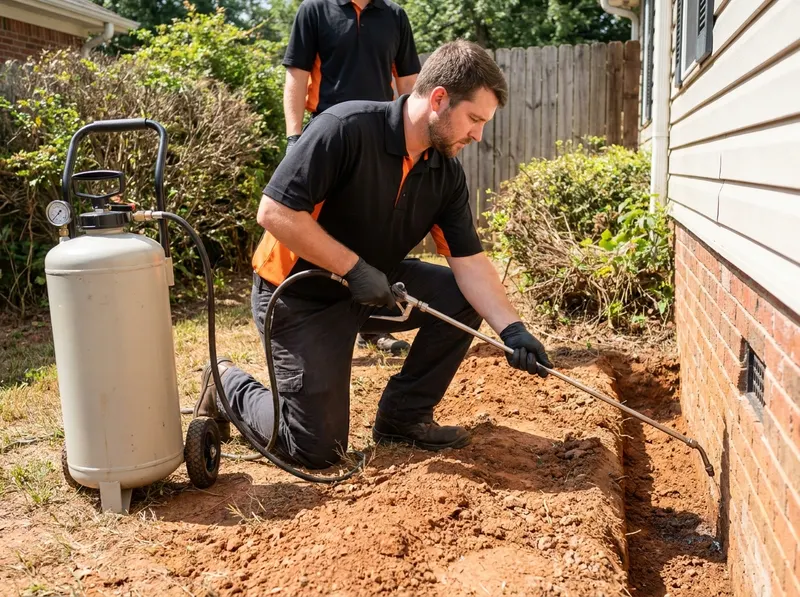
Subterranean termite soil treatments establish a continuous liquid termiticide barrier around the exterior perimeter and slab footings of residential buildings. Technicians excavate continuous six-inch trenches directly adjacent to exterior foundation walls, applying four gallons of non-repellent liquid solution per ten linear feet to eliminate foraging Reticulitermes flavipes workers before they access internal structural sills. Where concrete driveways, masonry walkways, or brick patios directly abut exterior foundation walls, technicians drill 1/2-inch injection ports spaced every twelve inches through the hardscape down to the soil bed, injecting termiticide under hydraulic pressure before sealing each drilled access hole with color-matched elastomeric masonry compound. This continuous soil saturation creates an imperceptible toxic zone that foraging termite workers carry back to the subterranean nest, eliminating the reproductive queen and the entire subterranean colony within thirty to ninety days.
Get a quote →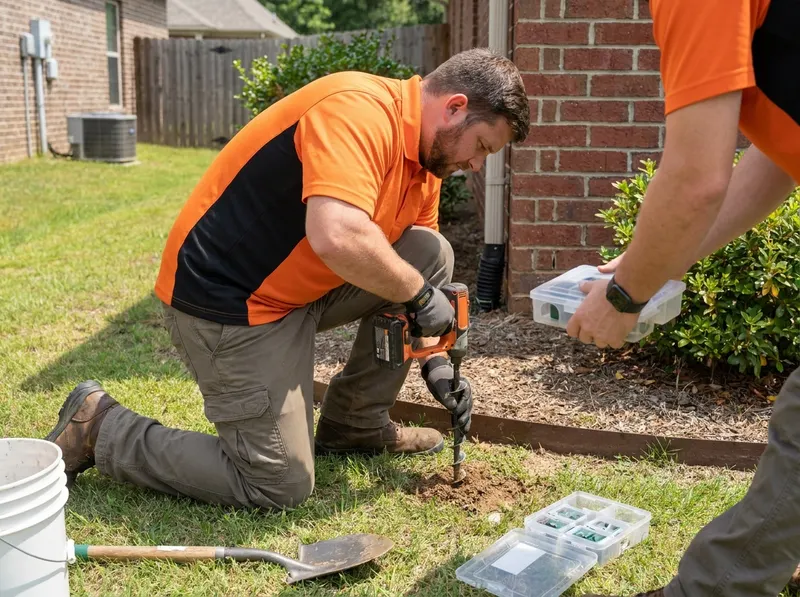
Termite baiting system installation places durable, low-profile monitoring stations into the soil at ten-foot intervals around the full exterior perimeter. Each station houses cellulose matrices impregnated with chitin synthesis inhibitors, allowing foraging subterranean termite castes to feed and deliver the active ingredient back to the central subterranean brood chamber to achieve total colony collapse. The monitoring cylindrical housings install flush with exterior turf or landscape bed grade, eliminating interference with lawn mowers and foot traffic. When subterranean termites ingest the active ingredient, it prevents the normal synthesis of chitin during future molting cycles, leaving the insects unable to form new exoskeletons and causing complete colony collapse without saturating soil with non-targeted liquid chemical compounds. Technicians check each station on a quarterly or semi-annual maintenance schedule, inspecting matrix consumption and replacing depleted cartridges to maintain uninterrupted biological containment.
Get a quote →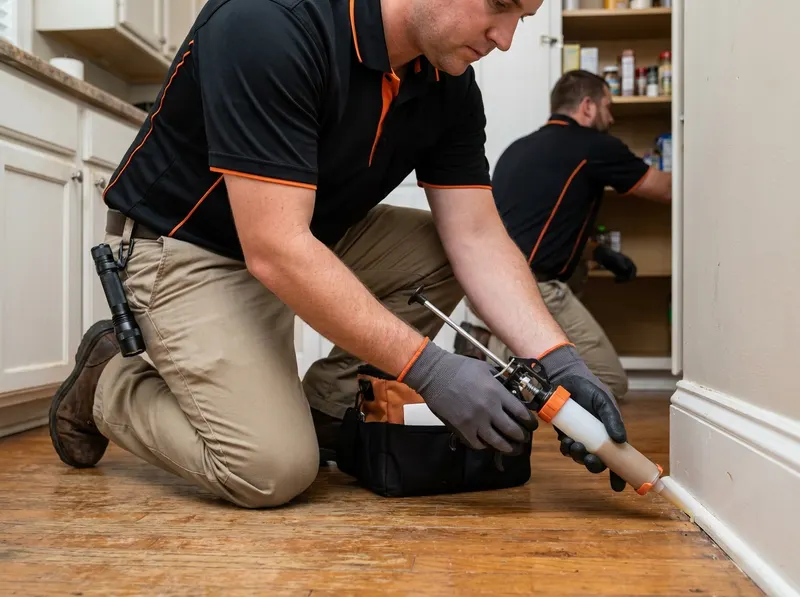
Targeted cockroach eradication focuses on indoor wall voids, cabinet hollows, and localized moisture lines harboring German, American, and oriental cockroach colonies. Technicians deploy targeted fipronil or hydramethylnon gel baits inside high-harborage junctions alongside insect growth regulators that disrupt structural molting cycles without releasing airborne chemical mists. The treatment protocol systematically isolates behind-refrigerator motor housings, dishwasher utility chases, sub-sink plumbing cutouts, and electrical switchboard cavities where food residue, elevated heat, and relative humidity concentrate. Technicians apply specialized microscopic silica dust or boric acid formulations deep into hidden wall framing voids using precision hand bulb dusters. The active insect growth regulator prevents nymphal roaches from maturing into reproductive adults, collapsing overlapping generational lifecycles within three to five weeks without contaminating food preparation surfaces.
Get a quote →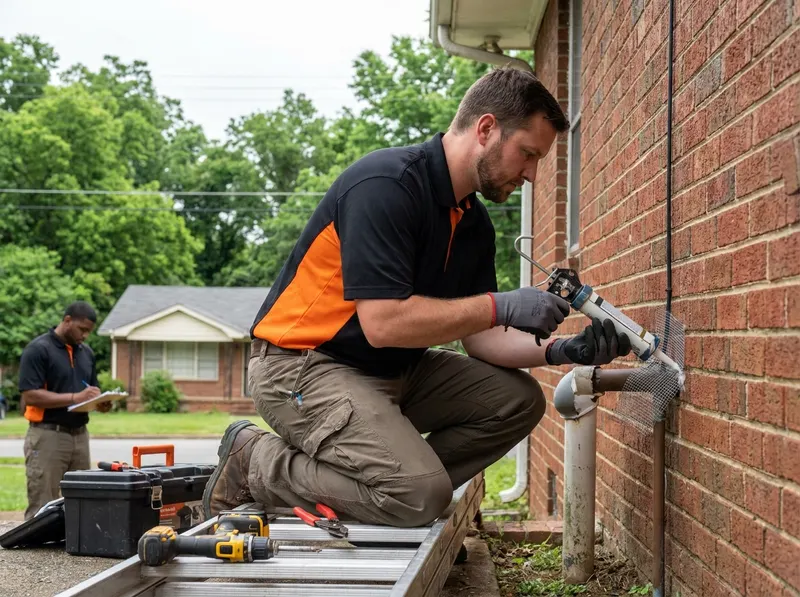
Structural rodent exclusion seals secondary architectural vulnerabilities against roof rats and Norway rats seeking harborage inside attics and basements. The service involves physically securing plumbing chase gaps, foundation vents, and roofline transitions using heavy-gauge wire mesh, copper mesh, and elastomeric sealants to shut down rodent transit vectors. Field technicians conduct a forensic exterior envelope survey, identifying rub marks, gnawed edges, and thermal draft points as narrow as one-quarter of an inch. Gable vents, soffit intersections, and roof fascia returns receive custom-cut 1/4-inch 19-gauge hot-dipped galvanized hardware cloth mechanically fastened with corrosion-resistant screws. Internal crawl space foundation walls undergo masonry patching around sewer lines, gas conduits, and AC refrigerant chase runs, blocking rodent pathways permanently and preventing attic insulation contamination without depending on toxic indoor bait blocks.
Get a quote →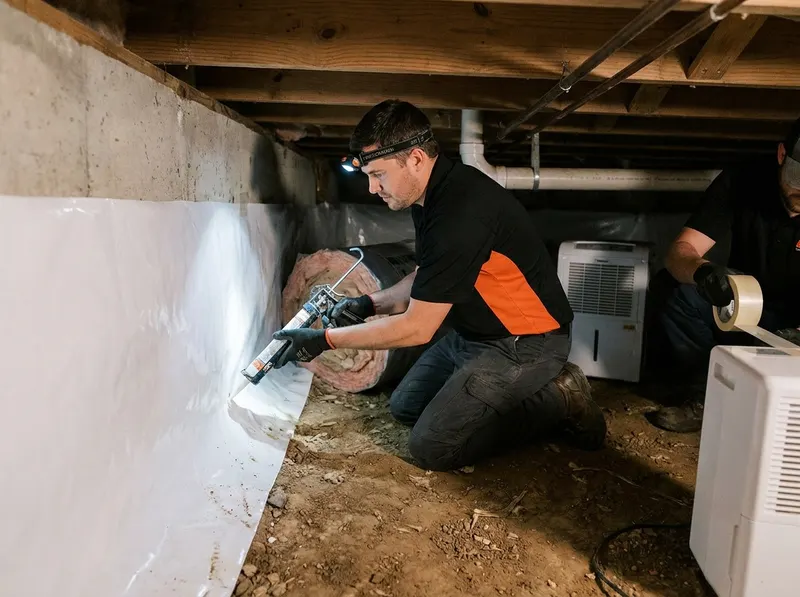
Crawl space encapsulation establishes complete sub-floor environmental control to starve humidity-dependent wood-destroying beetles and fungal organisms. Technicians lay continuous 12-mil to 20-mil reinforced vapor retarders across exposed dirt basements, seal exterior perimeter foundation vents, and install crawl-space dehumidification units to suppress wood moisture content below 15%. Crews clear debris, level high dirt ridges, and mechanically pin the heavy poly liner up exterior foundation walls and interior support piers to a standardized height of six inches below framing timbers, leaving an open inspection gap for subterranean termite detection. Foundation perimeter vents undergo closed-cell foam block insulation, and commercial-grade energy-efficient dehumidifiers vent condensation directly to exterior gravity lines, halting wood-rot fungi, powderpost beetles, and damp subterranean termite attractants permanently.
Get a quote →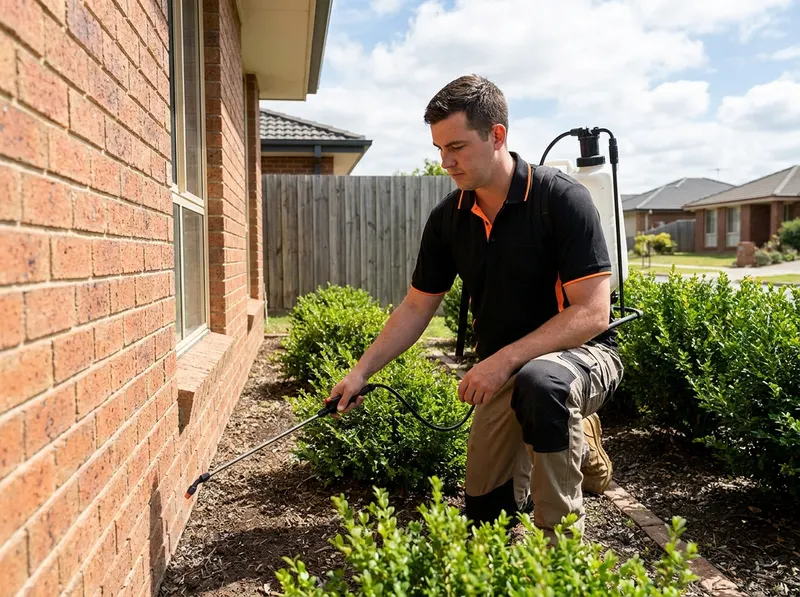
Exterior perimeter barrier applications form a multi-zone chemical shield across exterior masonry, siding laps, and perimeter turf. Crews apply microencapsulated pyrethroid solutions three feet up structural vertical walls and five feet outward across surrounding mulch, creating an exterior barrier that breaks ant foraging trails and prevents seasonal spider migrations. Application sweeps target downspout splash blocks, crawl space access hatches, outdoor spigot fixtures, and expansion joints where outdoor insects congregate. The specialized microencapsulation technology protects active chemical molecules against degradation caused by ultraviolet sunlight, high summer surface temperatures, and heavy convective precipitation. As target foraging pests like Argentine ants, pavement ants, and earwigs crawl across the treated band, the microscopic capsules adhere to their cuticles, providing extended lethal control for ninety days per quarterly service cycle.
Get a quote →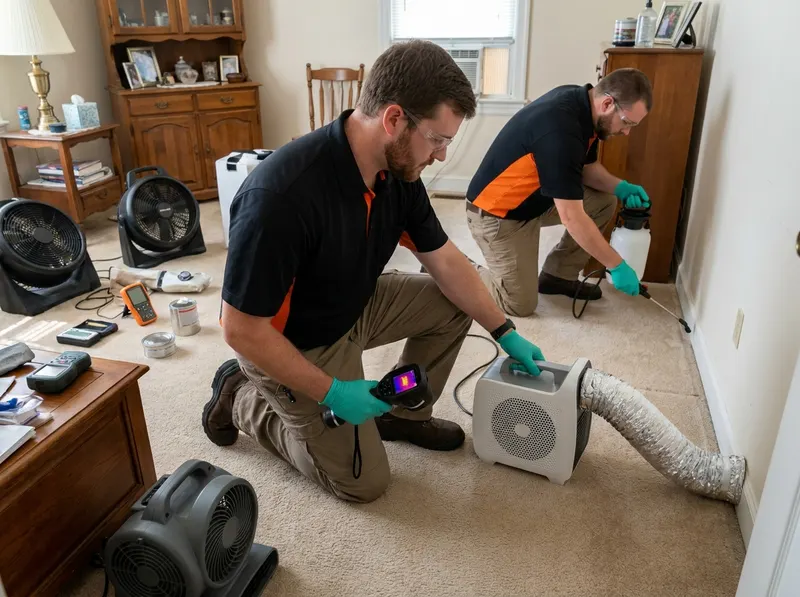
Bed bug thermal and residual treatments eradicate Cimex lectularius infestations tucked inside mattress seams, baseboard channels, and wall outlets. Specialized mobile heating equipment elevates ambient bedroom temperatures to lethal thermal thresholds above 122°F for continuous four-hour dwell times, followed by targeted silica dust injections in dry wall voids. High-output industrial air movers circulate heated air into enclosed closets, under carpet edges, and behind structural baseboards to penetrate deep into structural insulation and framed furniture joints. Technicians monitor heat distribution in real time using multiple wireless thermal sensors and handheld infrared cameras to eliminate temperature cold spots that could shelter surviving nymphs. Follow-up treatments inject non-repellent residual desiccant dusts behind electrical wall outlet covers and carpet tack strips, killing newly emerging hatchlings on contact for up to six months.
Get a quote →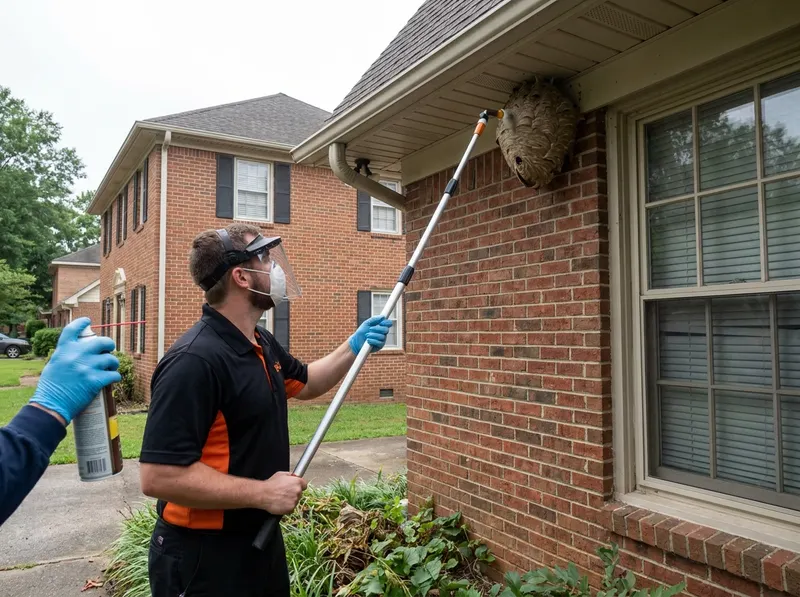
Wasp and hornet nest removal physically extracts aerial paper wasp, bald-faced hornet, and yellowjacket nests hanging along soffits, window dormers, and crawl space overhangs. Technicians inject targeted, fast-acting pyrethrum aerosols directly into nest chambers before mechanically detaching paper envelopes and treating the perimeter contact zone with deterrent barriers. For ground-nesting yellowjacket colonies located near decorative retaining walls or landscape berms, crews inject specialized micro-suspension dust formulations straight into the subterranean burrow entrance to neutralize subterranean defense chambers. The treatment area undergoes scrape cleaning to strip away residual pheromone scent markers that attract future fertile queens during spring building cycles, followed by an exterior residual pyrethroid spray across eaves, rafter tails, and porch ceilings to deter rebuild attempts.
Get a quote →You get a firm, itemized quote for your pest control services before any work begins, no surprises, no pressure.
Careful prep, tidy work, and a full cleanup when we are done. We treat your home and belongings like our own.
The same trusted, background-checked team from the first call to the final check.
Selecting structural pest defense requires matching the biological pressure of the target species to property construction types. If structural framing or foundation sills show moisture staining, hollow mud shelter tubes, or pinhole penetrations, choose liquid non-repellent barrier trenching or hexlumuron bait stations to achieve subterranean termite colony elimination. If crawling vectors such as German cockroaches, smoky brown roaches, or Argentine ants appear inside kitchens, plumbing voids, or crawl spaces, select targeted micro-encapsulated crack-and-crevice baiting paired with a three-foot by five-foot exterior foundation barrier.
The operational trade-off is mechanical isolation versus localized chemical control: liquid barriers alter the surrounding soil chemistry to eliminate entire insect colonies over several weeks, whereas targeted structural dusting and exclusion seals yield immediate mechanical blockades but require physical carpentry modifications along vents and fascia boards. When roof rats, deer mice, or brown rats infiltrate attic insulation or crawl spaces, choose physical exclusion using 1/4-inch galvanized hardware cloth alongside exterior tamper-resistant bait stations rather than interior broadcast rodenticides. Mechanical exclusion eliminates entry points permanently, avoiding the sanitation risk of hidden rodent mortality within finished walls, though it requires meticulous physical sealing of all utility penetrations exceeding a quarter of an inch.
If brown recluse spiders or black widows occupy basements and subfloors, select specialized structural micro-aerosol void injections combined with exterior perimeter power sprays and targeted glue monitors rather than localized aerosol foggers. Localized aerosol foggers disperse rapidly into ambient air spaces without penetrating the structural crevices and wall chases where arachnids harbor, whereas targeted deep-void dusts and residual micro-encapsulated pyrethroids adhere to raw framing lumber and concrete block voids for up to six months. In homes with elevated crawl space relative humidity exceeding 70%, standard surface treatments yield temporary suppression because damp subfloors continuously attract wood-boring powderpost beetles, fungus gnats, and subterranean termites.
In those scenarios, pairing mechanical perimeter soil barriers with a sealed 12-mil vapor retarder, wrapped structural piers, and mechanical dehumidification permanently deprives wood-destroying insects of the moisture gradients necessary for sustained structural digestion. The investment trade-off rests between localized seasonal pest treatments and whole-structure environmental management: isolated topical chemical applications provide short-term symptomatic knockdown across a single season at lower initial expense, whereas structural crawl space barrier systems and permanent building envelope sealing fundamentally alter the microclimate to deny entry vectors permanently, requiring a higher upfront investment that lowers ongoing chemical reliance over five to ten years.
Every project gets a firm, written price after a free on-site visit. Ranges below for orientation.
Tell us about your pest control services job and we'll send a clear, written quote, usually the same day. Or just call and talk to a real Birmingham pro.
(659) 272-4032
Properties built along the sandstone and limestone base of Red Mountain and across the valley floor face acute structural challenges from moisture-rich Birmingham red clay. Expansive soils trap hydrostatic moisture beneath crawl spaces in historic areas like Highland Park, Forest Park, and Five Points South, driving eastern subterranean termites upward along brick foundation piers and stone sills. Warm humid microclimates near urban tree canopies like Red Mountain Park and the Birmingham Botanical Gardens create extended activity periods for smoky brown cockroaches and roof rats, requiring continuous exterior barrier lines and mechanical sub-floor venting controls. Dense tree cover along Montclair Road, Clairmont Avenue, and Crest Road drops organic debris onto roof valleys and gutters, establishing damp exterior harborage zones that shelter wood roaches and carpenter ants before they burrow into soffit fascia boards. In older residential neighborhoods like Glen Iris and Bush Hills, uninsulated stone foundations, brick veneer weep holes, and aging fieldstone retaining walls offer direct structural passageways for field mice and Norway rats seeking heated shelter as autumn temperatures drop. Across the industrial and valley corridors flanking Interstate 20 and Interstate 59 near Sloss Furnaces National Historic Landmark and Railroad Park, heavy ground compaction and commercial stormwater runoff drive subterranean pests toward elevated residential footings. These distinct geographical microclimates demand customized perimeter depth treatments, soil-type termiticide dilution adjustments, and mechanical crawl space moisture barriers tailored to the specific hydrology of Jefferson County properties.
Free estimates for Birmingham & the surrounding area.
 Torvexa Pest Defense