Torvexa Pest DefenseTorvexa Pest Defense

Bed Bug Thermal and Residual Treatments Birmingham

Structural bed bug eradication requires addressing the biological vulnerabilities of Cimex lectularius across all life stages, including eggs, nymphs, and reproductive adults. The Entomological Society of America…
Get My Free Estimate →(659) 272-4032
Bed Bug Thermal and Residual Treatments in Birmingham, AL
Quick answer
  • What is included: Full structural thermal heating to lethal threshold temperatures, baseboard precision residual applications, mattress encasement inspections, and detailed post-treatment barrier monitoring.
  • Turnaround duration: Thermal remediation cycles require 6 to 8 hours on-site, with same-day structural re-entry permitted once indoor ambient temperatures drop below 85 degrees Fahrenheit.
  • Remediation costs: Local treatments begin at a $200 minimum assessment and spot-barrier charge, averaging $1,200 to $3,200 for comprehensive multi-room structural remediation.
  • Targeted materials: Industrial electric heating arrays, direct-fired forced air thermal units, high-temperature structural blowers, micro-encapsulated pyrethroids, and residual desiccant dusts.
  • Booking protocol: Direct dispatch scheduling is confirmed by telephone at (659) 272-4032, with technicians deploying across Jefferson County within 24 to 48 hours.

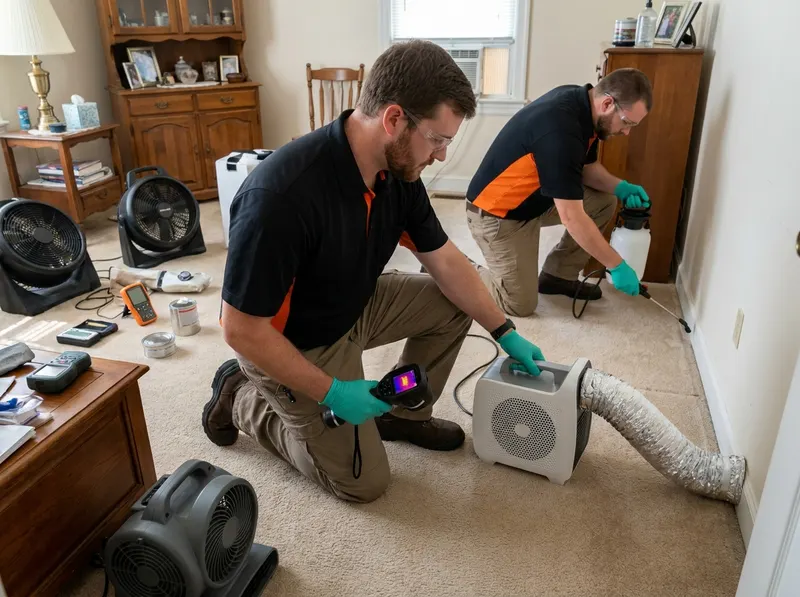
Structural bed bug eradication requires addressing the biological vulnerabilities of Cimex lectularius across all life stages, including eggs, nymphs, and reproductive adults. The Entomological Society of America documents that bed bugs and their eggs experience 100 percent mortality when exposed to sustained temperatures of 122 degrees Fahrenheit (50 degrees Celsius) for at least 90 minutes. A dual-protocol strategy pairs thermal remediation with long-acting residual applications. Mobile heating systems raise structural core temperatures inside baseboards, mattresses, and interior wall voids to a controlled range between 125 and 135 degrees Fahrenheit. This temperature band eliminates harborages without warping residential hardwood floors, melting electrical conduit, or damaging drywall common in historic homes throughout Forest Park, Highland Park, and Redmont Park.

While thermal treatments provide immediate elimination within interior living zones, thermal convection currents can push insects toward unheated outer perimeter zones or exterior wall tracks. Precision chemical residual treatments resolve this limitation. Technicians apply micro-encapsulated pyrethroids, non-repellent insecticides, and amorphous silica desiccant dusts directly into electrical faceplates, subfloor seams, and carpet tack strips. In multi-unit residential properties common to Five Points South, Avondale, and the University of Alabama at Birmingham (UAB) Campus corridor, unassisted retail foggers fail because aerosol droplets settle exclusively on horizontal surfaces without penetrating bed frame joints. Furthermore, retail pyrethroid foggers cause colonies to scatter across adjoining shared walls, converting a single-room harborage into a multi-unit structural infestation. The residual liquid and dust barrier persists for 60 to 90 days, neutralizing any nymphs hatching from concealed perimeter pockets that thermal thresholds did not reach.

Site preparation determines remediation success across older framing profiles in Glen Iris, Bush Hills, Crestwood North, and Roebuck Springs. Property occupants must remove heat-sensitive items prior to service deployment, including pressurized aerosol cans, medications, wax candles, vinyl records, oil paintings, and indoor houseplants. Heavy fabrics, structural furnishings, and standard electronics remain inside the thermal envelope to guarantee internal insect mortality. Technicians position remote wireless thermocouple sensors inside core mattress foam, under subfloors, and deep within insulated exterior wall cavities to track heat migration in real time. Following thermal cycles, technicians confirm uniform thermal penetration above 122 degrees Fahrenheit before executing residual perimeter applications along entry thresholds and plumbing penetrations.

Bed Bug Thermal and Residual Treatments cost in Birmingham

Single-Room Targeted Residual Barrier (Spot Application)$200 to $450
Apartment or Multi-Family Unit Full Thermal & Residual Package$850 to $1,800
Single-Family Home Thermal Remediation (Up to 2,000 Sq Ft)$1,500 to $2,800
Historic or Multi-Story Structural Remediation (2,000+ Sq Ft)$2,400 to $4,200

Every job gets a firm, written price after a free on-site visit.

Common questions

How long do bed bug thermal and residual treatments take to complete in Birmingham?
Thermal treatments in Birmingham require between 6 and 8 hours of continuous operation to elevate and maintain structural temperatures between 125 and 135 degrees Fahrenheit. Technicians then require an additional 45 to 60 minutes to apply residual chemical barriers to baseboards, wall voids, and furniture seams.
Can residents remain inside a Birmingham home during bed bug thermal remediation?
Residents and domestic pets must vacate the Birmingham property for the entire duration of the thermal heating process. Occupants can safely re-enter the residence once interior air temperatures return to a safe threshold below 85 degrees Fahrenheit, typically within 1 to 2 hours post-treatment.
Are heat treatments safe for historic homes in Birmingham neighborhoods like Forest Park and Highland Park?
Industrial heat equipment safely remediates historic properties because structural temperatures are capped below 135 degrees Fahrenheit, which preserves plaster, heart-pine flooring, and original millwork. Any heat-vulnerable household goods such as wax items, cosmetics, medications, and vinyl records must be removed prior to technician arrival.
What is the minimum cost for bed bug remediation services in Birmingham?
The minimum charge for professional bed bug evaluation and targeted spot barrier application in Birmingham is $200. Whole-home thermal eradication packages range higher depending on verified square footage, structural layout, and infestation density, with exact costs confirmed following an on-site structural inspection.
Why is a residual chemical treatment required alongside heat eradication in Birmingham?
Residual chemical applications prevent surviving perimeter insects or external reintroductions from re-establishing harborage within the home. Desiccant dusts and micro-encapsulated liquid insecticides stay active along baseboards and inside wall cavities for up to 90 days after the thermal equipment departs.

Get started today

Tell us about your bed bug thermal and residual treatments job in Birmingham and we'll send a clear, written quote, usually the same day.
Get your free pest control services quote, Birmingham

We only use your ZIP to check availability, no spam.