Suburban Birmingham properties face distinct parasite vectors driven by heavy tree canopies, continuous summer humidity, and proximity to wildlife corridors. Neighborhoods bordering Red Mountain Park and the heavily…
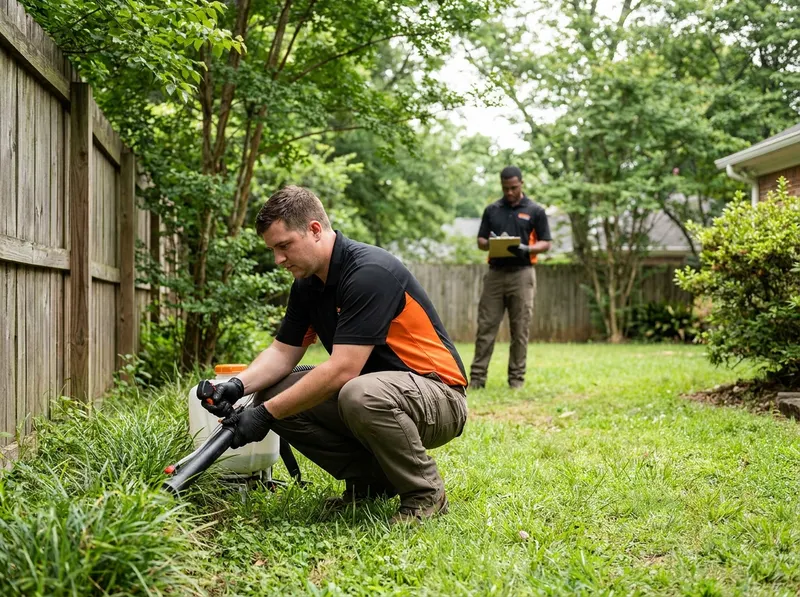
Suburban Birmingham properties face distinct parasite vectors driven by heavy tree canopies, continuous summer humidity, and proximity to wildlife corridors. Neighborhoods bordering Red Mountain Park and the heavily wooded ridges of Redmont Park and Forest Park experience persistent tick introductions from white-tailed deer and small rodents. In older residential enclaves such as Highland Park, Crestwood North, and Bush Hills, shaded turfgrass, damp foundation plantings, and unmanaged ground cover create microclimates where flea larvae thrive protected from direct sunlight. Untreated yards expose pets and residents to pathogens, including Rickettsia species and Lyme disease bacteria, within weeks of seasonal emergence.
Effective exterior parasite management relies on targeted residual chemistry rather than broad-spectrum broadcasts. The protocol utilizes synthetic pyrethroids bound with an insect growth regulator (IGR) such as pyriproxyfen, applied directly to the lower three feet of structural foundations, fence lines, and low-hanging foliage. The adulticide eliminates active ticks and fleas on contact, while the IGR prevents surviving eggs and larvae from maturing into breeding adults. A crucial operational detail involves treatment timing relative to moisture: applications require a minimum of two hours of dry surface contact before rainfall or automatic irrigation cycles to bind properly with plant leaves and soil mulch, maintaining a 30 to 60-day protective threshold.
Property size and foliage depth determine the operational parameters of yard eradication. For lots under a quarter-acre in urban settings like Five Points South, Avondale, and Glen Iris, a targeted backpack mist-blower applies 3 to 5 gallons of mixed product focused strictly on harborage zones and turf perimeters. Larger half-acre to full-acre parcels in Roebuck Springs require high-volume power-rig sprayers dispensing 20 to 50 gallons to penetrate thick brush, leaf litter, and woodpiles. Homeowners must coordinate flea and tick yard elimination with veterinary-grade topical or oral treatments on domestic animals; treating exterior vegetation without concurrent host animal treatment leaves a continuous biological bridge for structural re-infestation.
Every job gets a firm, written price after a free on-site visit.
Tell us about your flea and tick yard elimination job in Birmingham and we'll send a clear, written quote, usually the same day.
 Torvexa Pest Defense